Avos’ — A Russian State of Mind
There is a word in the Russian language that carries a deep, complex meaning. It contains an entire world view and a fatalistic attitude in meeting the world. The word is “авось” (avos’).
It can be translated as “hopefully” or" “maybe it will work out“, but these English words fail to capture the full meaning. Implying just “hope“ is not enough — avos’ contains an element of recklessness, a willingness to rely on chance, a fatalism, a dare.
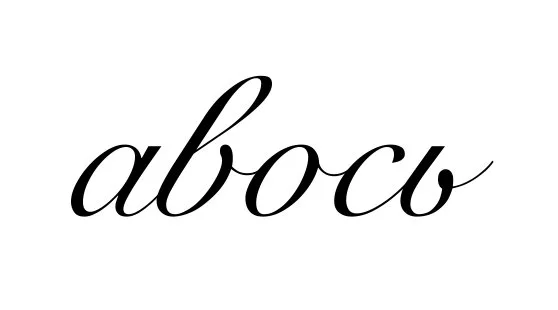
Avos’ as a term covers big and small. Broadly speaking, it implies that you see the world as a chaotic environment where a plan made is needless, because it will inevitably fail or fall apart. The world is yours, right now — so you better just grab it. And then stop worrying so much, because we’ll all die anyway. That’s what it means. And it doesn’t even carry any negative connotations per se, it just is. Avos’ applies to an attitude in politics, business, military decision making, or simply in your everyday life. The apostrophe made at the end of the word in English is merely the agreed upon way of expressing the Russian-native letter “ь“.
Авось всё обойдётся, не переживай так сильно.
Avos' vso oboydotsya, ne perezhivay tak sil'no.
Everything will be fine, don’t worry so much.
Я ещё ничего не подготовил, но авось пронесёт.
Ya yeshcho nichevo ne podgotovil, no avos' pronesot.
I haven’t prepared much, but let’s see if it won't work out after all.
Пойду на собеседование — авось повезёт и возьмут.
Poydu na sobesedovaniye — avos' povezot i voz'mut.
I’m going to a job interview – hope they’ll pick me!
Я взял с собой только одну бутильку — авось хватит.
Ya vzyal s soboy tol'ko odin butil’ky — avos' khvatit.
I only brought one bottle — I guess it’ll be enough.
Он всегда действует по принципу: «авось получится».
On vsegda deystvuyet po printsipu: «avos' poluchitsya»
He has this personal motto: “Avos’ — it’ll all work out“
Поехали без брони — авось найдём свободный номер.
Poyekhali bez broni — avos' naydom svobodnyy nomer.
We didn’t reserve a room — they’ll probably just have one available.
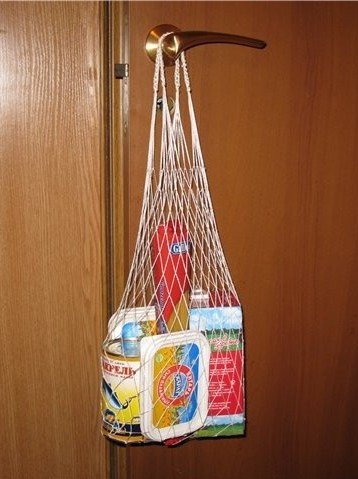
The pictured string bag is called an “avoska”, and it means a “what-if“. A “what-if” bag. The small, collapsible string bag was in the Soviet Union carried in case the butcher had meat, the baker fresh bread, or the market butter.
In the Soviet Union, stores would not always have enough for all — so you’d have to be vigilant and quick to get in line whenever opportunity arose. This made the case for having your avoska on your person at all times.
It’s a way of life. It’s avos’.
Adios! 👋